
Global internet penetration hit 73.8% as of DataReportal's April 2026 snapshot - roughly 6.1 billion people online
- and media buyers split that population into three cost-and-value brackets before writing a single ad. That bracket is the "tier." The TrafficSigma team breaks down what tier 3 countries means, the tier 3 GEO meaning behind the label, and where tier 3 traffic fits in a media plan.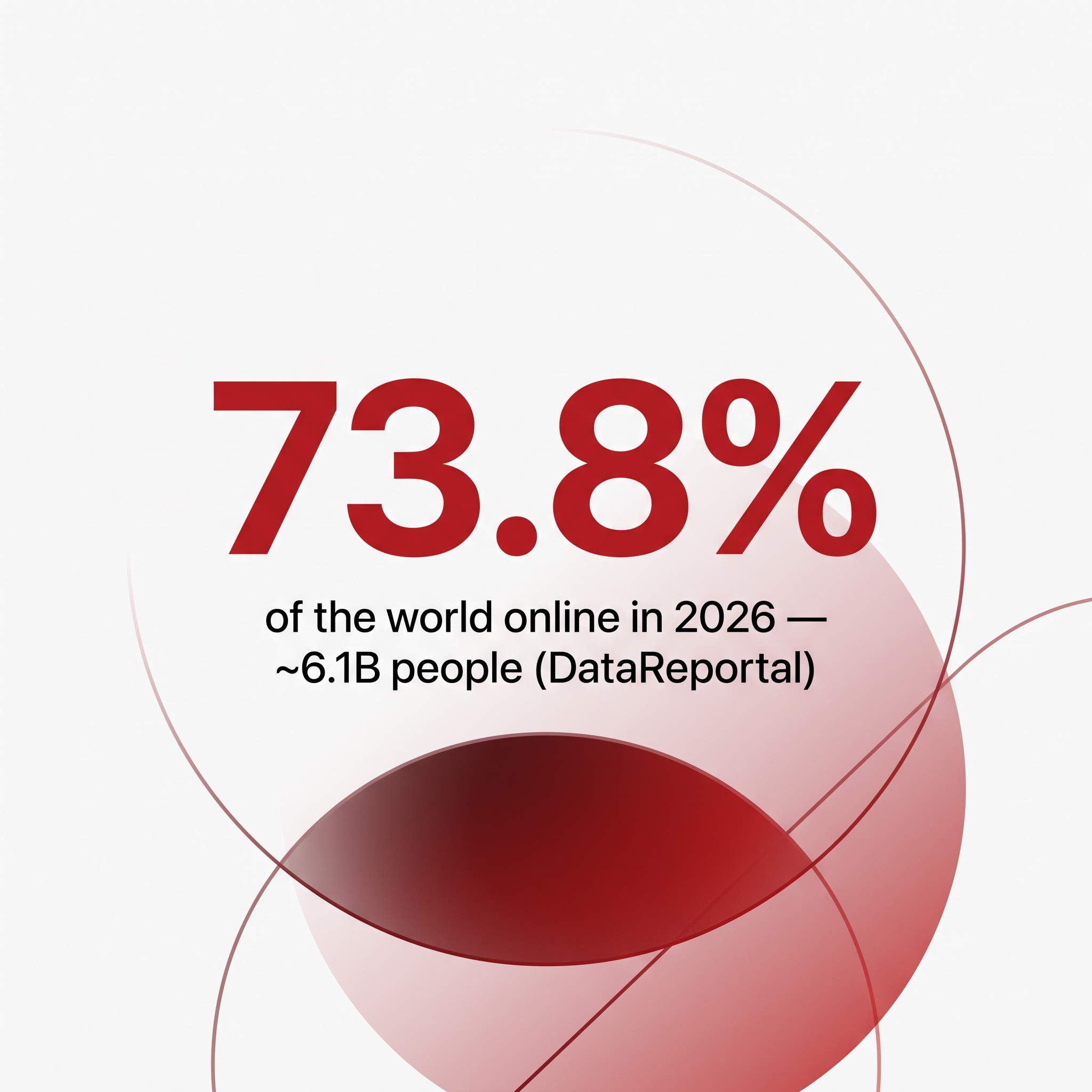
How the tier 1, tier 2, tier 3 countries framework works
In affiliate marketing and media buying, there's no single official body publishing a definitive tier 1 tier 2 tier 3 countries list - it's an industry shorthand, and networks draw the lines slightly differently. The logic behind it is consistent, based on three things:
- Purchasing power: GDP per capita and disposable income, which decide whether users can realistically become paying customers.
- Cost per click / impression: how expensive it is to reach a user - this tracks purchasing power closely, since demand bids traffic up in wealthier markets.
- Conversion value: what a converted user is worth - a $200 average deposit in one country versus $5 in another changes a campaign's economics entirely.
Networks weigh these differently, so you'll see disagreement at the edges. The core of each tier, below, rarely moves.
Tier 1 countries
Tier 1 is the smallest group and the most expensive to advertise in: the US, UK, Canada, Australia, Germany, the Netherlands, Switzerland, and the rest of Western Europe and the wealthiest Nordic markets. Internet penetration here is near-saturated and disposable income is high - exactly why every advertiser wants in and CPC/CPM rates run highest. Tier 1 traffic converts at the highest value per user, but competition for that user is fierce, so cost-per-acquisition is also highest.
Tier 2 countries
Tier 2 sits in the middle: Brazil, Mexico, Turkey, Thailand, Poland, and the Philippines are typical examples, alongside much of Eastern Europe, Latin America, and Southeast Asia. These are markets with a growing middle class, improving internet infrastructure, and rising willingness to spend online - without tier 1's saturation or price competition. That's why tier 2 is often the sweet spot once tier 1 CPCs get too expensive to test profitably: cheaper traffic, a real paying audience, less bidding pressure.
Launch your next campaign with TrafficSigma's self-serve traffic!Tier 3 countries
Tier 3 is what most people mean by "what are tier 3 countries" in a media-buying context: developing economies with lower average income, less mature payment infrastructure, and enormous online populations. Typical tier 3 GEOs include Pakistan, Bangladesh, Nigeria, Kenya, Vietnam, and Myanmar, plus much of Sub-Saharan Africa and South and Southeast Asia. India and Egypt are commonly classified as tier 2 or tier 3 depending on the network - this is genuine industry disagreement rather than a settled classification, so check how your specific traffic source tiers those two before building a campaign around the assumption. Tier 3 traffic is the cheapest on the market and high-volume by definition - some of these countries rank among the largest internet populations on earth despite low average spend per user. That's an economic classification, not a judgment of worth, and it's exactly why tier 3 traffic isn't "throwaway" traffic - it's a distinct tool for distinct uses, covered next.
Comparison table: tier 1 vs. tier 2 vs. tier 3 countries
| Tier | Example countries | Relative traffic cost | Purchasing power | Best use case |
|---|---|---|---|---|
| Tier 1 | US, UK, Canada, Australia, Germany, Netherlands, Switzerland | Highest | Very high | High-value verticals (Finance/Forex, premium iGaming) where CPA justifies cost |
| Tier 2 | Brazil, Mexico, Turkey, Poland, Thailand, Philippines | Medium | Medium-to-high, rising | Balanced growth markets, expanding iGaming and sweepstakes audiences |
| Tier 3 | Pakistan, Bangladesh, Nigeria, Kenya, Vietnam (India, Egypt: commonly tier 2 or tier 3 depending on network) | Lowest | Lower, but improving | High-volume testing, creative/funnel validation, utilities, sweepstakes |
Why media buyers deliberately use tier 3 traffic
Cheap doesn't mean useless - tier 3 traffic solves problems tier 1 traffic is too expensive to solve:
- Test creatives and funnels cheaply. Validate a new hook or landing page before committing tier 1 budget.
- Run high-volume verticals profitably. Sweepstakes and utilities depend on volume, not one high-value conversion.
- Build retargeting pools at scale. A big, cheap top-of-funnel audience feeds a pipeline a small tier 1 budget couldn't populate.
- Diversify GEO risk. Spreading spend beyond competitive, regulation-sensitive tier 1 markets limits exposure to any one market's swings.
The tradeoff: lower purchasing power per user and lower payouts - "different unit economics," not "low quality." TrafficSigma's 248+ GEO coverage lets buyers move between tier 1, 2, and 3 targeting in one dashboard, so scaling from tier 3 tests into tier 1 or tier 2 is a targeting change, not a new platform.
Start scaling your campaigns with TrafficSigma
Which GEO tier should your campaign target?
Tier 1, tier 2, and tier 3 countries aren't an official standard - they're shared shorthand for purchasing power, traffic cost, and conversion value. Match the tier to the goal: tier 1 when a high payout justifies a high CPC, tier 2 for growth-market upside at moderate cost, tier 3 when the goal is volume or cheap testing. That takes granular targeting across every tier in one place - which is exactly what TrafficSigma's 248+ GEO network with device, OS, and carrier-level targeting is built for, whether the campaign is a tier 1 Finance/Forex push or a tier 3 sweepstakes volume play.